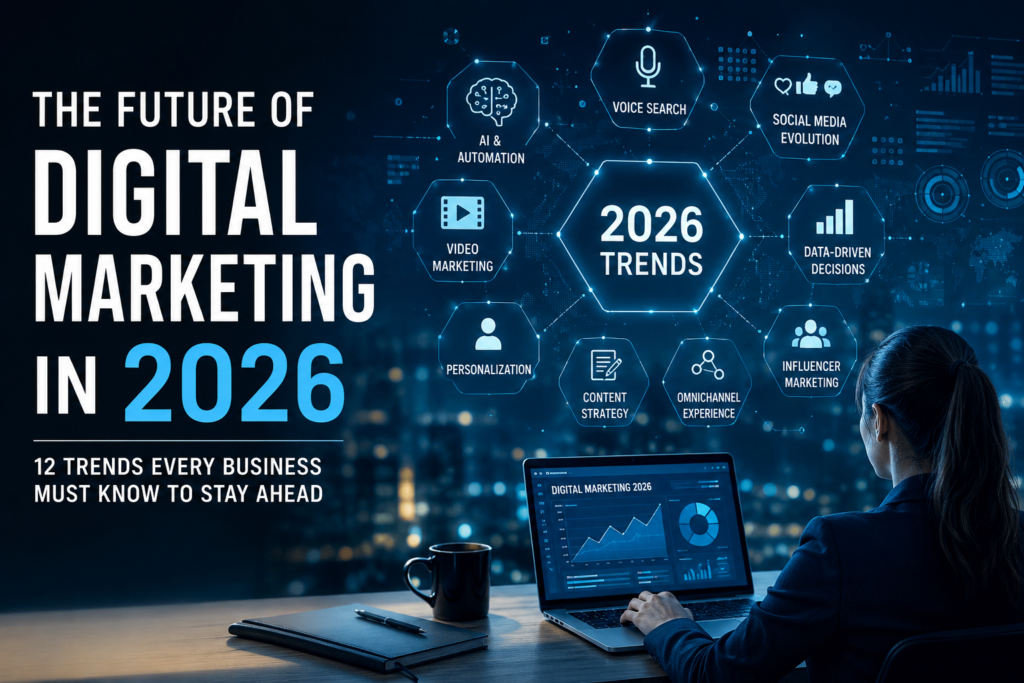
The Future of Digital Marketing in 2026: 12 Trends Every Business Must Know to Stay Ahead
Digital marketing has never stood still, but 2026 is proving to be one of the most exciting years yet. From artificial intelligence transforming content creation to customers expecting highly personalized experiences, businesses can no longer rely on outdated marketing strategies. What worked even a year ago may not deliver the same results today. Whether you’re a small business owner, entrepreneur, freelancer, or marketing professional, staying ahead of these changes is essential. The brands that embrace innovation while keeping customers at the center of every strategy are the ones that will continue to grow. In this blog, we’ll explore the biggest digital marketing trends shaping 2026 and explain how your business can use them to attract more traffic, generate quality leads, and increase sales. 1. AI Is Becoming Every Marketer’s Smartest Assistant Artificial Intelligence (AI) is no longer just a trend—it’s a daily business tool. Companies are using AI to write content, generate ad copy, analyze customer behavior, automate email campaigns, and even provide instant customer support through intelligent chatbots. However, there’s one important thing to remember: AI should support your creativity, not replace it. Customers still value authentic stories, real experiences, and human connections. Businesses that combine AI-powered efficiency with genuine, human-centered communication are seeing the best results. Action Tip: Use AI for research, brainstorming, and automation, but always review and personalize your content before publishing. 2. SEO Is Now More About People Than Search Engines Search Engine Optimization continues to evolve. Search engines have become much better at understanding user intent rather than simply matching keywords. Instead of stuffing pages with repetitive phrases, successful websites focus on answering real questions, providing helpful information, and creating a great user experience. High-quality blogs, fast-loading websites, mobile responsiveness, and trustworthy content are now more important than ever. Businesses should also optimize for conversational searches since more users are searching using voice assistants and AI-powered search tools. Action Tip: Write content that solves problems instead of writing only for keywords. 3. Video Content Continues to Dominate If a picture is worth a thousand words, then a video is worth thousands of customer interactions. Short-form videos on platforms like Instagram Reels, YouTube Shorts, and TikTok continue to receive higher engagement than many traditional content formats. Customers enjoy behind-the-scenes videos, tutorials, customer testimonials, product demonstrations, and educational tips. Video helps businesses build trust much faster because viewers can see real people behind the brand. Ideas for Businesses: Remember, your videos don’t have to be professionally produced. Authenticity often performs better than perfection. 4. Personalization Is No Longer Optional Customers expect businesses to understand their preferences. From personalized email campaigns to customized product recommendations, people now expect relevant experiences instead of generic marketing messages. Businesses using customer data responsibly can create marketing campaigns that feel helpful rather than intrusive. Personalization can include: The better your business understands customer needs, the stronger your marketing becomes. 5. Social Media Is Becoming a Search Engine Millions of users now search Instagram, YouTube, LinkedIn, and TikTok before searching Google. People search for: This means businesses should optimize their social media profiles just like websites. Include searchable keywords in your bio, captions, hashtags, and video descriptions. Consistent posting also improves discoverability. 6. Voice Search Is Growing Rapidly Smart speakers and voice assistants continue to influence online searches. Instead of typing: “best SEO company Kerala” Users often ask: “Who is the best SEO expert near me?” Voice searches are longer, more conversational, and question-based. Businesses should create FAQ pages and write content using natural language. This helps improve visibility for voice-based searches. 7. Building Trust Is the New Marketing Strategy Customers have become more selective about the brands they support. People want transparency, authenticity, and expertise before making purchasing decisions. Ways to build trust include: Trust often converts better than aggressive sales tactics. 8. Email Marketing Still Delivers Outstanding ROI Despite the rise of social media, email marketing remains one of the highest-performing digital marketing channels. Unlike social media platforms, your email list belongs to you. Regular newsletters help businesses: Instead of sending promotional emails all the time, focus on delivering value first. Educational content keeps subscribers engaged for the long term. 9. Local SEO Is More Important Than Ever For businesses serving a specific area, local SEO is essential. Customers frequently search for services “near me,” making local optimization a key factor in attracting nearby customers. A well-optimized business profile, consistent contact information, customer reviews, and locally focused content help improve visibility. Adding location-specific keywords naturally throughout your website can significantly increase your chances of appearing in local search results. 10. Data Privacy Builds Customer Confidence Consumers are becoming increasingly aware of how businesses collect and use personal information. Respecting customer privacy isn’t just about following regulations—it’s about building lasting trust. Businesses should clearly explain how customer data is used, obtain proper consent, and avoid excessive data collection. Transparency helps strengthen customer relationships and enhances brand credibility. 11. Content Marketing Remains the Foundation of Success Algorithms change. Advertising costs increase. Social media trends come and go. But valuable content continues to generate long-term results. Businesses that regularly publish helpful blogs, guides, videos, and educational resources establish themselves as industry experts. Instead of chasing every viral trend, focus on consistently solving customer problems. Quality content continues to attract organic traffic months and even years after publication. 12. Customer Experience Is the Ultimate Competitive Advantage Marketing doesn’t end when someone clicks your advertisement. Every interaction matters. A fast website, easy navigation, helpful customer support, simple checkout process, and responsive communication all influence buying decisions. Satisfied customers become loyal customers. Loyal customers become brand advocates. Providing an exceptional customer experience often costs less than constantly acquiring new customers. Final Thoughts Digital marketing in 2026 is no longer about using every available platform—it’s about choosing the right strategies and putting your audience first. Businesses that focus on creating valuable content, embracing AI responsibly, improving SEO, building trust, and delivering exceptional customer experiences are more likely to achieve sustainable growth. Success doesn’t happen overnight. It